Tag: commercial kitchen fire risk

  • The Hidden Costs of NOT Cleaning Your Kitchen Extraction System

    The Hidden Costs of NOT Cleaning Your Kitchen Extraction System

    Kitchen extraction neglect consequences hit restaurant owners hard when that £800 cleaning bill turns into a £47,000 insurance claim rejection. Most operators focus on visible costs while the hidden ones destroy their business.

    Key Takeaways:

    • 70% of commercial kitchen fires trace to grease accumulation, with average claim values of £67,000 per incident
    • Fire officer enforcement notices carry £5,000-£20,000 fines plus mandatory closure until compliance is achieved
    • Dirty extraction systems increase energy costs by 15-25% due to reduced airflow and motor strain

    What Actually Happens When You Skip Kitchen Extraction Cleaning?

    Grease buildup in kitchen extraction system, close-up view.

    Extraction system neglect is a cascade failure that starts small and ends catastrophic. Grease accumulation begins within days of operation, building microscopic layers that compound into thick, flammable deposits.

    The deterioration follows a predictable pattern. Week one: invisible grease particles coat the interior surfaces. Month two: deposits thicken enough to restrict airflow. Month four: motors strain against the resistance, drawing more power and generating heat. Month six: grease deposits reach 500 microns thickness, reducing airflow by 40%.

    This airflow reduction forces extraction fans to work harder, consuming 15-25% more energy while providing less ventilation. Heat buildup accelerates grease polymerization, creating the sticky, hard deposits that professional kitchen extraction cleaning targets.

    The fire risk escalates exponentially. Fresh grease burns at 280°C, but aged, polymerized deposits ignite at just 180°C. Your standard cooking temperatures suddenly become ignition sources. Grease accumulation creates the fuel load that turns a small flare-up into a structure fire.

    Compliance breaks down simultaneously. TR19 Grease specification requires cleaning intervals based on cooking volume and type. Missing these intervals voids insurance coverage and triggers regulatory enforcement. The cost comparison becomes stark: £800 for professional cleaning versus £47,000 for fire damage.

    How Much Does Insurance Claim Rejection Actually Cost?

    Rejected insurance claim on desk with fire-damaged items.

    Insurance companies reject kitchen fire claims when extraction systems lack proper maintenance documentation. The financial impact extends far beyond the initial fire damage.

    Cost Category With TR19 Certificate Without TR19 Certificate Difference
    Fire damage coverage £67,000 average payout £0 (claim rejected) -£67,000
    Legal costs £3,500 standard £12,000 appeals process +£8,500
    Business interruption 6 weeks covered 16 weeks self-funded +£45,000
    Equipment replacement Insurance replacement Full cost to owner +£25,000

    The average commercial kitchen fire claim reaches £67,000, but insurers reject 23% of claims citing extraction system neglect. Rejected claims force owners to fund the entire recovery themselves.

    Business interruption costs compound daily. Insurance covers lost revenue during repairs when proper maintenance records exist. Without TR19 certification, you fund every day of closure. A typical kitchen fire requires 6-16 weeks for full restoration, costing £2,800 per week in lost revenue for an average restaurant.

    Legal costs escalate when challenging claim rejections. Standard claim processing costs £3,500 in legal fees. Disputed claims cost £12,000 minimum, with success rates under 11% when extraction maintenance records are missing.

    Replacement equipment costs double without insurance coverage. Commercial extraction systems cost £15,000-£45,000 installed. Self-funding these replacements while managing fire damage creates cash flow crises that close businesses permanently.

    What Do Fire Officer Enforcement Notices Cost Your Business?

    Fire officer issuing notice to restaurant manager in kitchen.

    Fire officers issue enforcement notices when extraction systems violate fire safety regulations. The penalties escalate rapidly for non-compliance.

    • Initial enforcement notices carry £5,000 fines plus mandatory remediation deadlines of 28-56 days maximum
    • Failure to comply within the notice period triggers automatic £20,000 penalties and immediate closure orders
    • Repeat violations within 12 months result in £50,000 fines plus potential prosecution of the responsible person
    • Emergency closure notices for serious fire safety breaches shut operations immediately with no appeal period
    • Professional legal representation for enforcement proceedings costs £15,000-£30,000 regardless of outcome

    Birmingham Fire and Rescue Service issued 47 enforcement notices to commercial kitchens in 2023, with 89% citing extraction system deficiencies. The closure period averages 18 days while premises achieve compliance.

    Indirect costs multiply the direct penalties. Staff wages continue during closure. Supplier contracts require penalty payments for cancelled orders. Customer deposits need refunding for cancelled events. Marketing spend becomes worthless when the business cannot operate.

    Repeat offenses create permanent scrutiny. Fire officers schedule quarterly inspections for premises with previous violations, increasing operational disruption and inspection costs.

    How Does EHO Downgrading Destroy Restaurant Revenue?

    Downgraded food hygiene rating on restaurant window, customers outside.

    Environmental Health Officer inspections downgrade food hygiene ratings when extraction systems create contamination risks. The revenue impact starts immediately.

    Customer behavior changes within days of rating publication. Restaurants dropping from 5-star to 2-star ratings lose 47% of customers within 3 months. Online delivery platforms reduce search visibility for premises below 4-star ratings, cutting order volume by 60%.

    Food delivery apps impose additional penalties. Uber Eats and Deliveroo suspend listings for premises with 1-star or 2-star ratings. Just Eat reduces commission rates for 3-star premises, increasing operational costs.

    Recovery takes 6-18 months even with immediate remediation. EHO reinspection scheduling creates delays. Customer confidence rebuilding requires sustained marketing investment of £3,000-£8,000 monthly.

    Competitive disadvantage amplifies revenue loss. Customers choose nearby premises with higher ratings. Google Reviews average 2.3 stars lower for premises with poor hygiene ratings, creating lasting reputation damage.

    The rating publication system ensures permanent visibility. Food Standards Agency publishes ratings online indefinitely. Historical low ratings appear in search results years after improvement, requiring ongoing reputation management.

    When Does Equipment Failure Cost More Than Cleaning?

    Damaged kitchen extraction fan motor, disassembled on workbench.

    Grease accumulation causes premature equipment failure that costs thousands more than preventive maintenance. The failure patterns follow predictable timelines.

    Equipment Component Cleaning Cost Replacement Cost Failure Timeline
    Extraction fan motor £180-£450 quarterly £2,400-£8,500 18 months overdue cleaning
    Ductwork sections £300-£800 deep clean £5,000-£15,000 replacement 24 months neglect
    Fire dampers £120-£200 service £800-£2,200 each 12 months without cleaning
    Speed controls £80-£150 maintenance £1,200-£3,500 15 months grease contamination

    Commercial extraction fan motors fail when grease infiltrates the housing and bearings. Motor strain from reduced airflow creates heat buildup and premature bearing failure. Replacement costs £2,400-£8,500 including installation and downtime.

    Ductwork replacement becomes necessary when grease deposits harden into unmovable layers. Deep cleaning costs £300-£800 per section, while replacement costs £5,000-£15,000 for typical restaurant installations.

    Fire dampers fail closed when grease accumulation prevents proper operation. Service costs £120-£200 per damper, but replacement reaches £800-£2,200 each plus installation.

    Warranty voidance multiplies replacement costs. Equipment manufacturers specify cleaning intervals in warranty terms. Missing scheduled maintenance voids coverage, forcing full-cost replacement for failed components.

    Emergency replacement premiums increase costs 40-60% over scheduled installation. Failed equipment requires immediate replacement to maintain operations, eliminating price negotiation and competitive bidding.

    How Much Extra Energy Does a Dirty System Actually Waste?

    Restricted airflow in kitchen duct, grease buildup visible.

    Dirty extraction systems consume 15-25% more energy than properly maintained equipment. The increased consumption stems from motors working against restricted airflow.

    Airflow reduction forces fan motors to operate at higher speeds to maintain adequate ventilation. A 40% airflow reduction requires 60% more motor power to achieve minimum ventilation rates. Energy consumption increases exponentially, not proportionally.

    Utility bill impacts become substantial for high-volume kitchens. A typical commercial kitchen extraction system consumes £200-£400 monthly in electricity. Dirty systems increase this to £260-£600 monthly, adding £720-£2,400 annually in energy costs.

    Motor strain creates heat buildup that requires additional cooling. HVAC systems work harder to maintain kitchen temperatures when extraction motors generate excess heat. Cooling costs increase 8-12% in summer months.

    Carbon cost implications affect businesses with sustainability commitments. Increased energy consumption adds 2.4-4.1 tonnes of CO2 annually per dirty extraction system. Carbon offset costs £120-£200 per tonne for verified programs.

    The energy waste continues until professional cleaning restores proper airflow. Unlike equipment failure, energy inefficiency accumulates daily costs that exceed cleaning expenses within 6 months of the missed maintenance cycle.

    Frequently Asked Questions

    Can I get my insurance money back if my claim was rejected for extraction neglect?

    Insurance claim rejections for extraction system neglect are rarely overturned unless you can prove the system was professionally cleaned within TR19 timescales. The Financial Ombudsman Service upholds 89% of insurer rejections when proper documentation is missing. Your only recourse involves expensive legal proceedings with minimal success probability.

    How long do I have to fix extraction problems after a fire officer notice?

    Fire officer enforcement notices typically give 28-56 days for compliance, but serious fire safety breaches can trigger immediate closure. Extensions are possible but require professional cleaning booking confirmations and detailed remediation plans. Missing the deadline results in automatic £20,000 fines plus closure orders.

    Does skipping one cleaning cycle really void my equipment warranty?

    Most commercial extraction equipment warranties specify professional cleaning intervals, typically every 3-6 months depending on cooking volume. Missing even one scheduled cleaning can void warranty coverage, leaving you liable for full replacement costs. Equipment manufacturers require maintenance records as warranty claim evidence.

  • Kitchen Fire Safety: How Grease Buildup Causes Commercial Kitchen Fires

    Kitchen Fire Safety: How Grease Buildup Causes Commercial Kitchen Fires

    Commercial kitchen fire risk peaks when grease accumulates in extraction systems, creating ignition sources that trigger 70% of all commercial kitchen fires. Fire officers tighten enforcement and insurers demand compliance proof precisely because dirty ductwork acts as an accelerant, spreading flames through roof spaces faster than detection systems can respond.

    Key Takeaways:

    • Grease ignites at 315°C, typical kitchen temperatures during heavy cooking exceed 300°C
    • Fire spreads through dirty ductwork in under 60 seconds, often reaching roof spaces before detection
    • Insurance claims get rejected if fire officers find evidence of poor extraction maintenance

    How Do Kitchen Fires Actually Start?

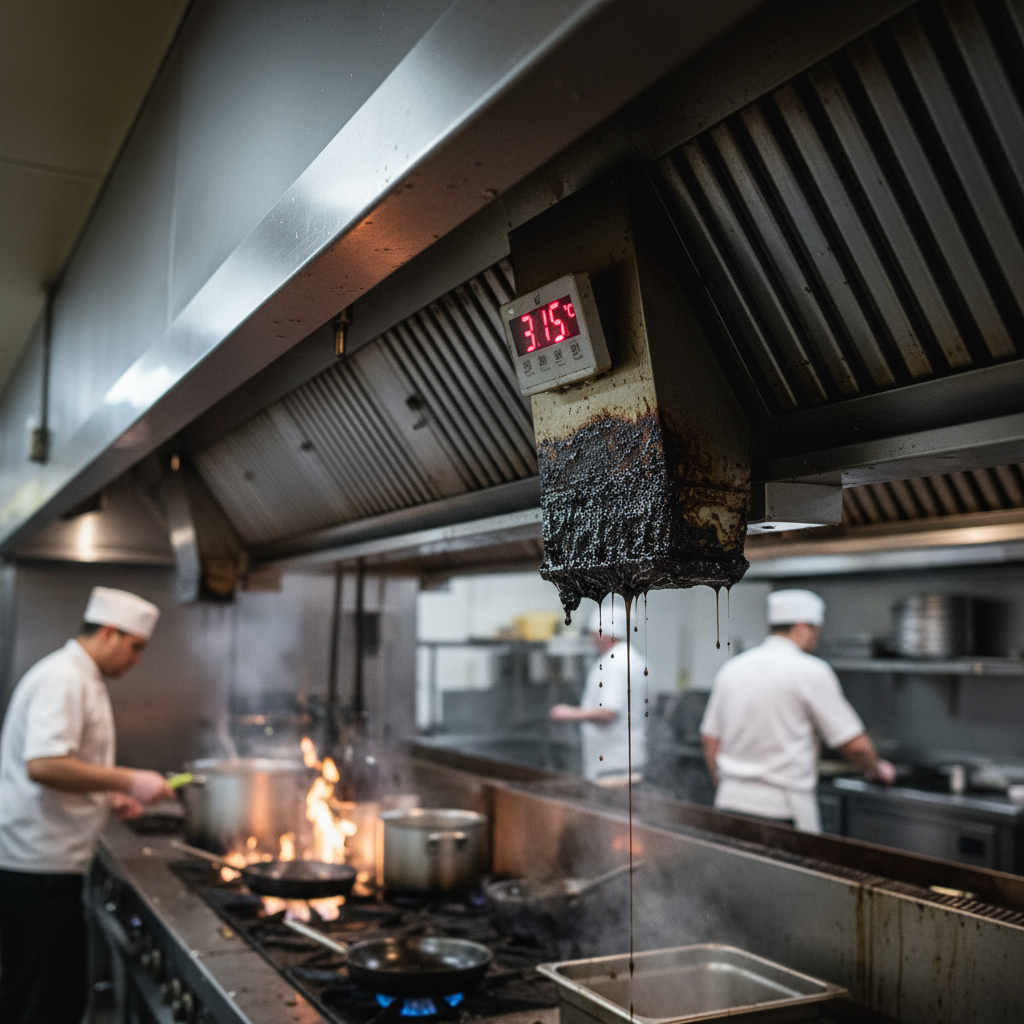
    Commercial kitchen with greasy extraction surfaces and a 315°C thermometer.

    Grease fire ignition occurs when accumulated deposits reach their flash point of 315°C. This means contaminated extraction surfaces become ticking bombs during normal cooking operations, not just during equipment failures or human error.

    Most restaurant fires don’t start with dramatic flare-ups or obvious hazards. They begin when grease-coated ductwork heats beyond safe thresholds during routine service. Commercial fryers operate at 180-190°C, well below grease ignition temperature. But surface temperatures on contaminated extraction components climb past 300°C when ambient heat builds up during peak cooking periods.

    The physics work against busy kitchens. Heat transfer through metal ductwork creates hot spots where grease deposits act as insulation, trapping thermal energy. A clean steel surface dissipates heat efficiently. Add a 2mm layer of polymerized grease, and that same surface retains heat like a ceramic tile, reaching dangerous temperatures that persist long after cooking stops.

    Cooking oil flash points vary, vegetable oil ignites around 370°C, while animal fats combust at lower temperatures. But accumulated grease deposits don’t behave like fresh oil. Repeated heating cycles break down the chemical structure, lowering ignition thresholds and creating carbonized residues that ignite faster than clean oil.

    Kitchen extraction systems amplify these risks through airflow patterns. Extraction fans pull heated air through contaminated ductwork at high velocity, creating convective heating that raises surface temperatures beyond what static conditions would produce. The system designed to remove fire hazards becomes the mechanism that spreads them.

    Ignition sources multiply in contaminated systems. Electrical components overheat more easily when surrounded by grease deposits. Friction from unbalanced fan assemblies creates sparks. Even static electricity discharges can trigger fires in grease-laden environments where clean systems would remain safe.

    Fire Spread Through Kitchen Extraction Systems

    Cross-section of kitchen ductwork with grease near heat source, showing fire spread.

    Fire spreads through contaminated ductwork following a predictable sequence that makes kitchen extraction cleaning essential for containing incidents at their source.

    1. Ignition occurs at the contaminated surface closest to the heat source, typically the canopy interior or the first horizontal duct section where grease accumulation is heaviest.

    2. Flames travel horizontally through the ductwork at approximately 3 metres per minute, following airflow patterns and feeding on accumulated grease deposits that act as solid fuel.

    3. Fire reaches the vertical riser section within 30-45 seconds, accelerating as it climbs due to natural convection and the chimney effect created by the extraction system’s design.

    4. Flames emerge at the roof termination point in under 60 seconds, often before kitchen staff realize a fire has started, spreading to roof materials and adjacent buildings before fire suppression systems activate.

    5. Secondary ignition occurs in concealed spaces, fire spreads through ceiling voids and wall cavities where building materials and insulation provide additional fuel sources.

    The extraction system acts as a purpose-built chimney during fire events. Grease thickness determines spread velocity, systems with 1mm deposits show slower propagation than those with 3-5mm accumulations. Heavy contamination creates continuous fuel paths that sustain combustion even when kitchen equipment shuts down.

    Vertical ductwork sections present the highest risk because rising hot gases accelerate flame spread through natural convection. Horizontal runs slow the process slightly, but only clean systems stop fire propagation entirely. Any grease accumulation provides sufficient fuel to sustain combustion and carry flames to building exteriors.

    Fire detection systems often fail to trigger before external spread occurs. Kitchen suppression systems target cooking equipment, not ductwork fires. By the time roof-mounted flames become visible, the fire has already progressed beyond kitchen boundaries into structural building components.

    UK Commercial Kitchen Fire Statistics: What the Data Shows

    Chart showing kitchen fire causes and damage costs, highlighting grease accumulation.

    Commercial kitchen fires account for a disproportionate share of restaurant incidents, with specific patterns revealing how extraction system maintenance correlates with fire risk.

    Fire Cause Percentage of Kitchen Fires Typical Damage Cost
    Grease accumulation in extraction 70% £150,000-£500,000
    Cooking equipment malfunction 15% £25,000-£75,000
    Electrical faults 10% £30,000-£100,000
    Human error (unattended cooking) 5% £10,000-£50,000

    Fire brigade incident reports across Birmingham, Manchester, and London show consistent patterns. Grease-related fires cause more extensive damage because they spread beyond kitchen boundaries before detection. Equipment malfunctions typically remain contained to the immediate cooking area.

    Regional variations reflect enforcement patterns and industry density. Birmingham’s concentration of takeaway establishments, 1,048 registered premises, correlates with higher incident rates in certain postal districts. The Balti Triangle experiences above-average fire service callouts related to extraction system failures, particularly during busy weekend periods.

    Cost implications extend beyond immediate fire damage. Business interruption claims average 3-6 months for grease fires that spread through extraction systems, compared to 2-4 weeks for contained equipment fires. Total economic impact including lost revenue, temporary relocation, and regulatory compliance often exceeds £1 million for established restaurants.

    Fire service response times affect outcome severity. Urban areas with 4-6 minute response windows show better containment rates, but extraction system fires often progress beyond controllable stages within that timeframe. Rural or suburban locations face higher total loss rates due to extended response times and limited water supplies.

    Insurance data reveals troubling trends in claim frequency. Commercial kitchen fire claims increased 23% between 2019 and 2022, with extraction-related incidents showing the steepest rise. This pattern drives premium increases and stricter policy conditions around maintenance documentation.

    What Happens When Fire Officers Find Dirty Extraction Systems?

    Fire safety officer inspecting greasy extraction systems in a commercial kitchen.

    Fire officer enforcement under the Regulatory Reform (Fire Safety) Order 2005 carries immediate consequences that can shut down restaurant operations within hours of inspection.

    • Immediate prohibition notices get issued under Article 31 when fire officers identify serious and imminent danger, typically triggered by visible grease accumulation exceeding 2-3mm thickness or evidence of overheating around extraction components.

    • Emergency cleaning deadlines range from 24-48 hours before enforced closure, fire officers specify exact remediation requirements and reinspection schedules, with non-compliance resulting in premises prohibition orders.

    • Criminal prosecution of the Responsible Person becomes likely when prohibition notices are ignored, RRO 2005 creates personal liability for directors, managers, or owners who fail to address identified fire safety breaches.

    • Enforcement notices require comprehensive documentation including TR19 certificates and maintenance records, fire officers examine cleaning frequency, contractor credentials, and work quality to determine compliance history.

    • Reinspection fees and administrative costs accumulate quickly, initial inspections are free, but enforcement action triggers charges of £500-£2,000 plus ongoing monitoring costs until full compliance is achieved.

    • Premises licensing reviews get triggered automatically when fire safety breaches occur, local authorities coordinate with fire services to examine whether business operators remain suitable to hold alcohol or food licenses.

    The Responsible Person designation under RRO 2005 creates clear liability chains. Restaurant owners cannot delegate responsibility to staff or contractors, they remain personally accountable for fire safety compliance regardless of operational arrangements. Fire officers target the business owner or designated manager who has legal control over premises safety.

    Enforcement patterns vary by region but follow predictable triggers. Anonymous complaints, insurance investigations, and planned inspection programs all lead to scrutiny. High-risk premises like busy takeaways or restaurants with previous incidents face more frequent visits and stricter standards.

    Emergency powers allow fire officers to restrict building use immediately when they identify imminent danger. These decisions cannot be appealed until compliance is achieved, making rapid remediation the only option for maintaining business continuity.

    Insurance Claims and Fire Risk: Why Insurers Reject Kitchen Fire Claims

    Insurance claim file showing rejected kitchen fire claims due to negligence.

    Insurance invalidation occurs when fire investigations reveal maintenance negligence, with rejection rates exceeding 40% for kitchen fires linked to poor extraction cleaning. Insurers scrutinize kitchen fire claims more aggressively than other commercial property losses because the preventable nature of grease-related incidents makes negligence easier to prove.

    Policy conditions around maintenance obligations create clear grounds for claim denial. Standard commercial property insurance requires “reasonable precautions” to prevent loss, interpreted by courts as compliance with industry standards for kitchen extraction cleaning. Missing TR19 documentation or evidence of extended periods without professional cleaning provides insurers with straightforward rejection grounds.

    Fire investigation procedures focus specifically on extraction system condition. Loss adjusters examine grease accumulation thickness, cleaning frequency records, and contractor qualifications to establish whether the fire resulted from preventable conditions. Investigations typically take 6-12 weeks, during which business interruption payments remain suspended pending outcomes.

    Documentation requirements for valid claims include TR19 certificates, contractor invoices, and photographic evidence of system condition before the incident. Restaurants that cannot produce cleaning records from the 6 months preceding a fire face automatic scrutiny and likely claim challenges. Court cases consistently uphold insurer rejections when maintenance evidence is missing or inadequate.

    Uninsured losses create devastating financial consequences. Restaurant fires without valid insurance coverage often result in permanent business closure due to repair costs exceeding £500,000 for extraction-related incidents. Rebuilding expenses, equipment replacement, and regulatory compliance upgrades compound the financial impact of rejected claims.

    Commercial kitchen fire risk assessment becomes critical for maintaining insurance validity. Professional fire risk assessments identify maintenance obligations and document compliance requirements that satisfy insurer demands. Regular updates to these assessments demonstrate ongoing attention to fire prevention obligations.

    Prevention: Breaking the Grease Accumulation Cycle

    Workers performing TR19 cleaning in a pristine commercial kitchen, preventing grease accumulation.

    Regular maintenance prevents grease fire conditions by eliminating the fuel sources that sustain extraction system fires. Restaurants with monthly TR19 cleaning show 85% lower fire incident rates compared to those cleaning quarterly or less frequently, demonstrating clear correlation between maintenance frequency and fire risk.

    Cleaning Frequency Fire Incident Rate Annual Maintenance Cost Potential Fire Damage Cost
    Monthly 0.8 incidents per 1000 premises £3,600-£4,800 £150,000+ (if incident occurs)
    Quarterly 5.2 incidents per 1000 premises £1,200-£1,800 £150,000+ (if incident occurs)
    Bi-annual 12.7 incidents per 1000 premises £600-£900 £150,000+ (if incident occurs)
    Annual or less 24.3 incidents per 1000 premises £300-£450 £150,000+ (if incident occurs)

    Professional cleaning standards differ dramatically from DIY approaches in effectiveness and documentation. BESA-registered contractors follow TR19 protocols that remove accumulated grease deposits rather than just redistributing them. Internal cleaning techniques access all ductwork surfaces where grease accumulates, while surface cleaning leaves hidden deposits that continue creating fire risks.

    Monitoring techniques for grease buildup include monthly visual inspections of accessible ductwork sections and annual professional assessments of internal conditions. Early warning signs include visible grease streaking on external surfaces, unusual odors during cooking, and reduced extraction performance that indicates airflow restriction.

    Cost-benefit analysis consistently favors prevention over fire damage recovery. Monthly professional cleaning costs £300-£400 for typical restaurant installations, while fire damage averages £150,000-£500,000 plus business interruption losses. Even restaurants that never experience fires benefit from reduced insurance premiums and compliance confidence.

    Kitchen extraction fire safety risk assessment requirements integrate with maintenance planning to identify specific vulnerabilities and cleaning priorities. Professional assessments examine ductwork design, cooking volume, and grease production rates to establish optimal maintenance schedules that prevent dangerous accumulation while controlling costs.

    Frequently Asked Questions

    At what temperature does kitchen grease actually catch fire?

    Accumulated grease ignites at approximately 315°C. While cooking oil in fryers operates at 180-190°C, contaminated extraction surfaces can exceed 300°C during heavy cooking periods, creating dangerous conditions. Heat buildup in grease-coated ductwork creates ignition risks even during normal cooking operations.

    How fast does fire spread through dirty kitchen ducts?

    Fire spreads through contaminated ductwork at roughly 3 metres per minute. In a typical restaurant with 15-20 metres of ductwork, flames can reach the roof space within 60 seconds of ignition. The extraction system acts as a chimney during fire events, accelerating flame spread beyond kitchen boundaries.

    Can fire officers actually shut down a restaurant immediately for dirty extraction?

    Fire officers have immediate prohibition powers under Article 31 of the Regulatory Reform (Fire Safety) Order 2005. They typically allow 24-48 hours for emergency cleaning before enforcing closure. Visible grease accumulation or evidence of overheating triggers these enforcement actions with no appeals process until compliance is achieved.

    Do insurance companies really reject kitchen fire claims over maintenance?

    Insurance rejection rates exceed 40% when fire investigations reveal inadequate extraction maintenance. Insurers require evidence of regular professional cleaning and valid TR19 documentation to process claims. Missing maintenance records or evidence of negligence provides clear grounds for claim denial that courts consistently uphold.