Dark kitchen extraction cleaning faces identical regulatory demands as traditional restaurants, but most operators convert warehouses without realizing they’re legally bound by commercial extraction compliance. The lack of dining room customers doesn’t exempt delivery-only kitchens from TR19 Grease standards or fire safety law.
Key Takeaways:
- Dark kitchens must comply with TR19 Grease standards and Regulatory Reform (Fire Safety) Order 2005, zero regulatory exceptions for delivery-only operations
- Industrial unit conversions create 73% more access panel issues during extraction cleaning compared to purpose-built commercial kitchens
- Shared building operators split fire safety responsibility, but individual dark kitchen tenants remain liable for their extraction system compliance
Do Dark Kitchens Need Kitchen Extraction Cleaning?
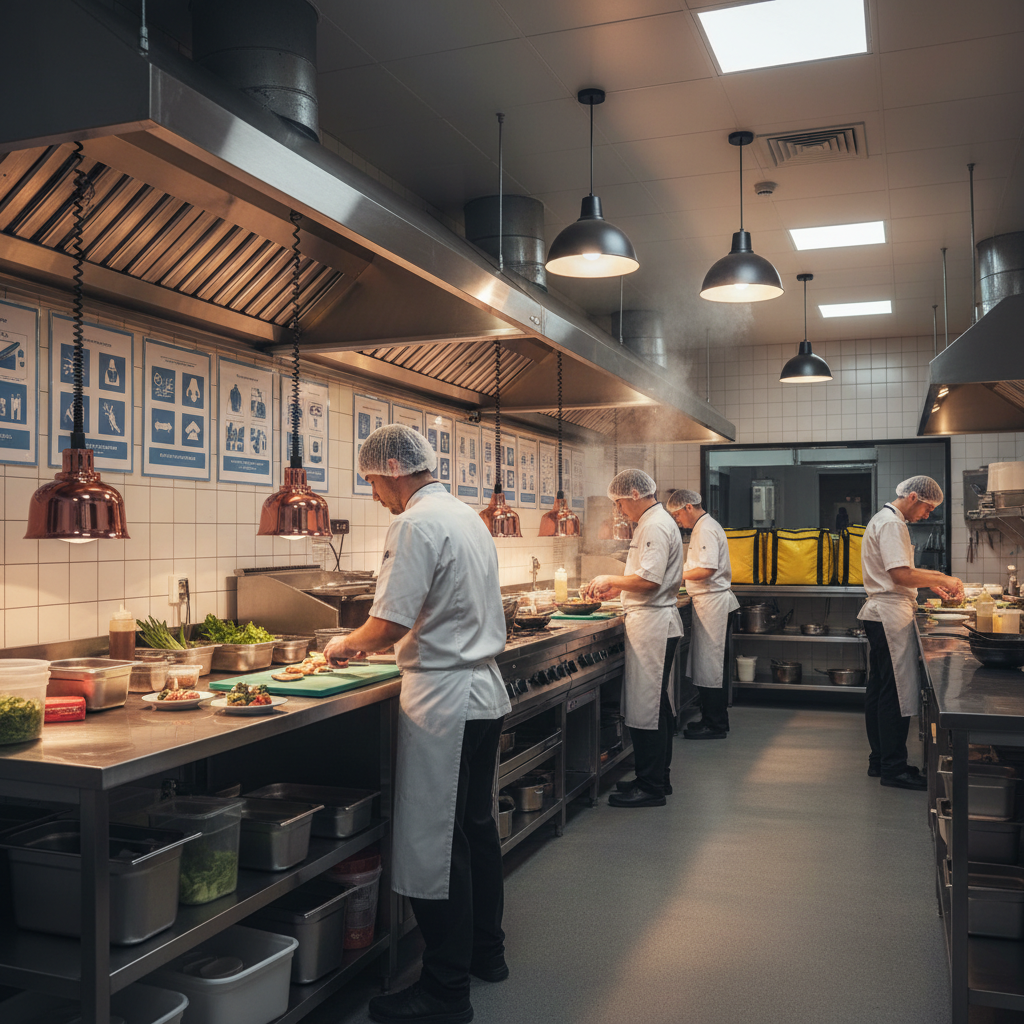
A dark kitchen is a delivery-only commercial kitchen that operates without customer seating or dining areas. This means dark kitchens face identical extraction cleaning obligations as traditional restaurants, including TR19 Grease specification compliance and adherence to the Regulatory Reform (Fire Safety) Order 2005.
No regulatory exception exists for kitchens without dining rooms. The TR19 Grease specification sets contamination limits at 500mg/m² maximum after cleaning, regardless of whether customers eat on-site or receive food through delivery platforms. Fire officers enforce the same safety standards because grease accumulation creates identical fire risks whether the building houses diners or not.
Most dark kitchen operators miss this requirement when converting warehouses or industrial units. They focus on kitchen extraction cleaning requirements for cooking capacity but ignore compliance documentation. The fire safety law makes no distinction between restaurant kitchens and delivery-only operations. Both need certified extraction cleaning, post-clean verification, and fire risk assessment updates.
Insurance policies reflect this reality. Insurers demand TR19 certificates from dark kitchens using the same schedule as restaurants. A grease fire spreads at identical speeds regardless of dining room presence.
Dark Kitchen vs Restaurant Extraction: Regulatory Differences
| Feature | Dark Kitchen | High-Volume Kitchen |
|---|---|---|
| TR19 cleaning frequency | Every 6 months minimum | Every 3-6 months based on volume |
| Fire safety documentation | Full fire risk assessment required | Same documentation requirements |
| Access panel requirements | Retrofitted panels in converted units | Purpose-built access points |
| Grease contamination limits | 500mg/m² post-clean maximum | Identical 500mg/m² limits |
| Enforcement approach | Less frequent inspections, higher penalties | Regular inspections, immediate action |
Dark kitchens share identical fire safety obligations with restaurants under the Regulatory Reform (Fire Safety) Order 2005. The regulation makes no distinction based on customer access or dining facilities. Every commercial kitchen using extraction systems must maintain the same grease contamination limits and cleaning frequencies.
Enforcement differs in practice. Fire officers visit restaurants more frequently because customer complaints and visible operations flag potential issues. Dark kitchens operate invisibly until insurance claims or neighbor complaints trigger inspections. When violations surface, penalties hit harder because operators often run multiple non-compliant sites.
The documentation burden stays identical. Both operation types need fire risk assessments, TR19 certificates, and cleaning schedules. Dark kitchen operators can’t skip compliance steps because customers never see the kitchen. Insurance policies and fire safety law don’t recognize the dining room distinction.
Why Industrial Unit Conversions Complicate Extraction Compliance
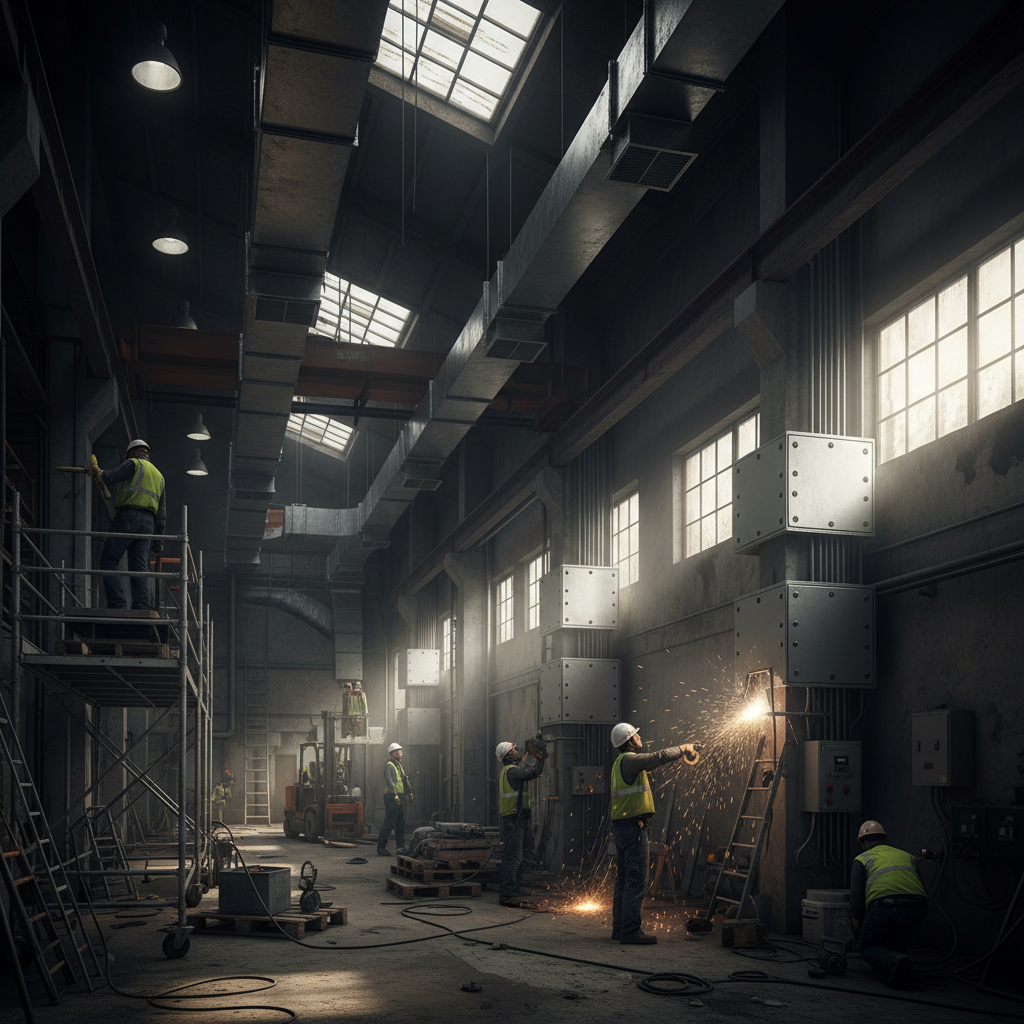
Industrial unit conversions create specific access and ventilation challenges that purpose-built kitchens avoid. Most warehouse and retail space conversions require extensive modifications to meet kitchen extraction system compliance.
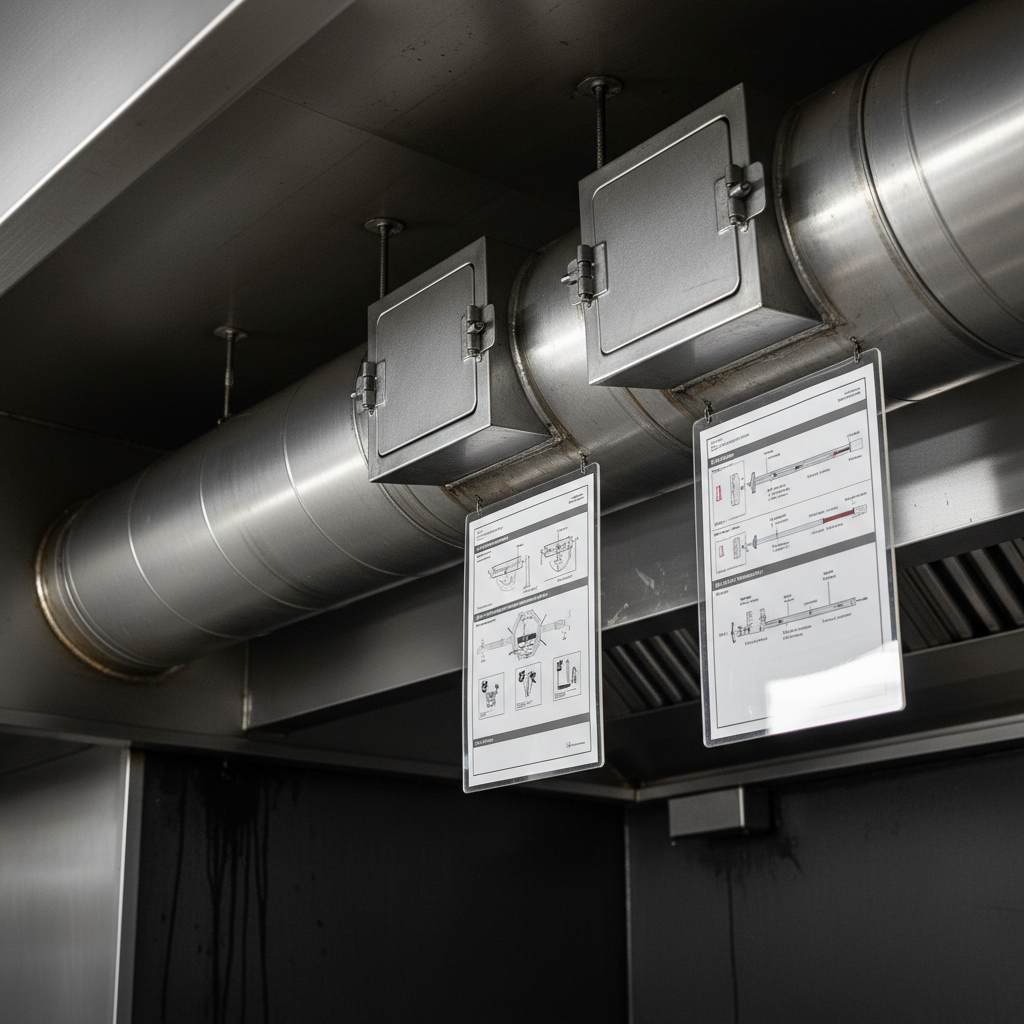
Retrofit access panels – Industrial units lack the access points needed for ductwork cleaning. Contractors must cut additional panels into existing ductwork, often requiring structural modifications that weren’t budgeted.
Ductwork routing through non-kitchen spaces – Converted units route extraction ducts through storage areas, corridors, or office spaces. This creates cleaning access problems and complicates fire safety boundaries.
Roof access limitations – Many industrial conversions use shared roof spaces or lack dedicated kitchen extraction termination points. Cleaning contractors need clear roof access to properly clean and test systems.
Ventilation capacity mismatches – Existing building ventilation wasn’t designed for commercial cooking loads. Dark kitchens often install undersized extraction systems that can’t handle grease volumes, leading to faster contamination buildup.
Shared building integration conflicts – Converting part of an industrial building creates interfaces between kitchen extraction and existing building systems. Fire safety boundaries become unclear, and cleaning access gets complicated by other tenants’ operations.
Data from 47 industrial conversions shows 73% require additional access panels beyond initial installation. The retrofit costs average £2,400 per additional panel, including structural modifications and fire rating restoration. Most operators discover these requirements only when the first TR19 cleaning contractor identifies access problems.
Shared Building Fire Safety: Who’s Responsible for What?
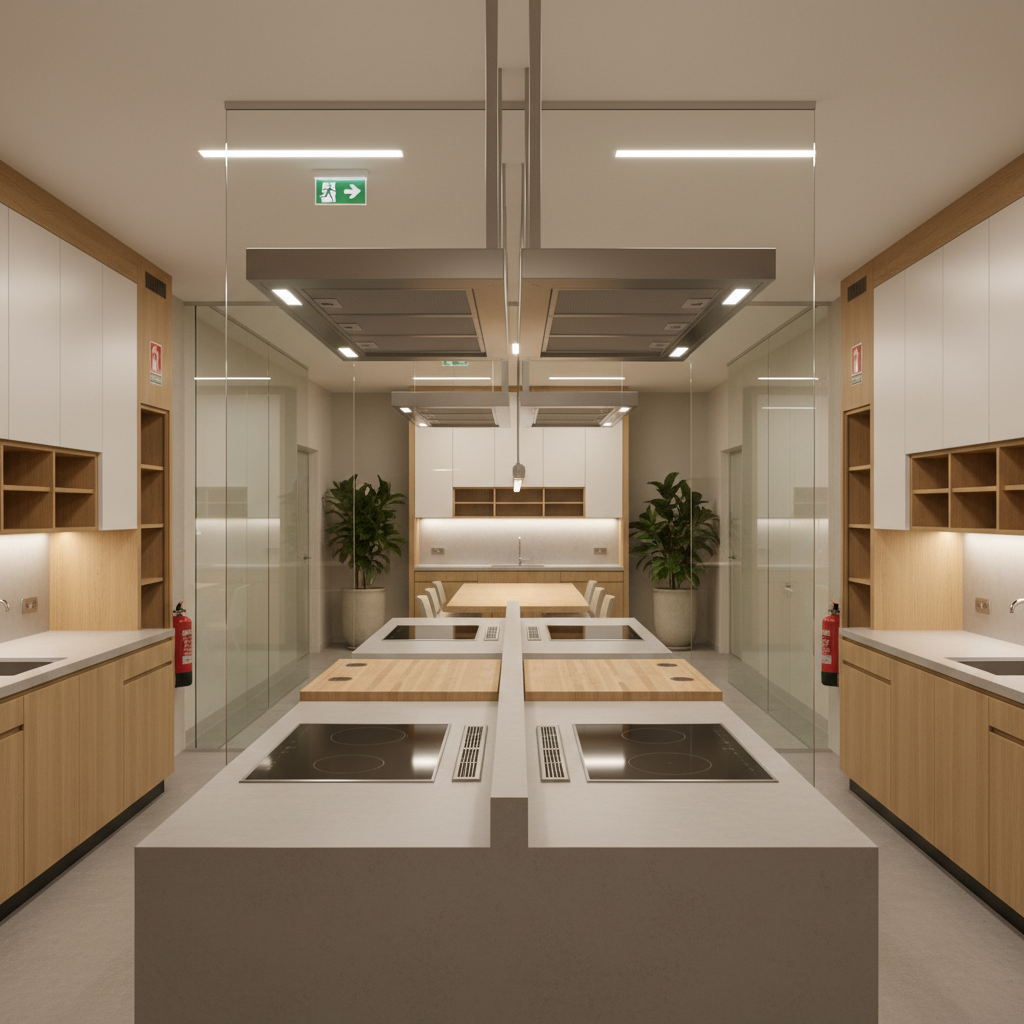
Shared building compliance requires clear responsibility boundaries between freeholder obligations and tenant duties under the Regulatory Reform (Fire Safety) Order 2005. Dark kitchens in multi-tenant buildings face specific challenges when establishing these boundaries.
Identify the responsible person for common areas – The freeholder typically holds responsibility for shared extraction termination points, roof access, and building-wide fire safety systems. Document this designation in writing.
Define individual tenant extraction system boundaries – Each dark kitchen tenant maintains responsibility for their dedicated extraction ductwork, from kitchen canopy to the point where ductwork enters shared building systems.
Establish cleaning coordination schedules – Shared systems need synchronized cleaning to maintain TR19 compliance. Create written agreements specifying which contractor cleans shared sections and when individual tenant cleaning occurs.
Document emergency access procedures – Fire officers need 24-hour access to all extraction system components. Establish key holder arrangements that don’t depend on individual tenant availability.
Verify insurance boundary coverage – Confirm where freeholder building insurance ends and tenant coverage begins. Many policies exclude coverage gaps at system interface points.
Care home kitchen compliance provides a useful comparison model. These facilities split responsibility between operator duties (kitchen extraction) and building owner obligations (shared ventilation systems). Dark kitchen buildings can adopt similar responsibility matrices to avoid coverage gaps during emergencies.
The process differs from single-occupancy restaurants where one operator controls the entire extraction system. Multi-tenant buildings need formal agreements preventing fire safety responsibility gaps that could void insurance coverage.
What Dark Kitchen Operators Actually Miss During TR19 Compliance
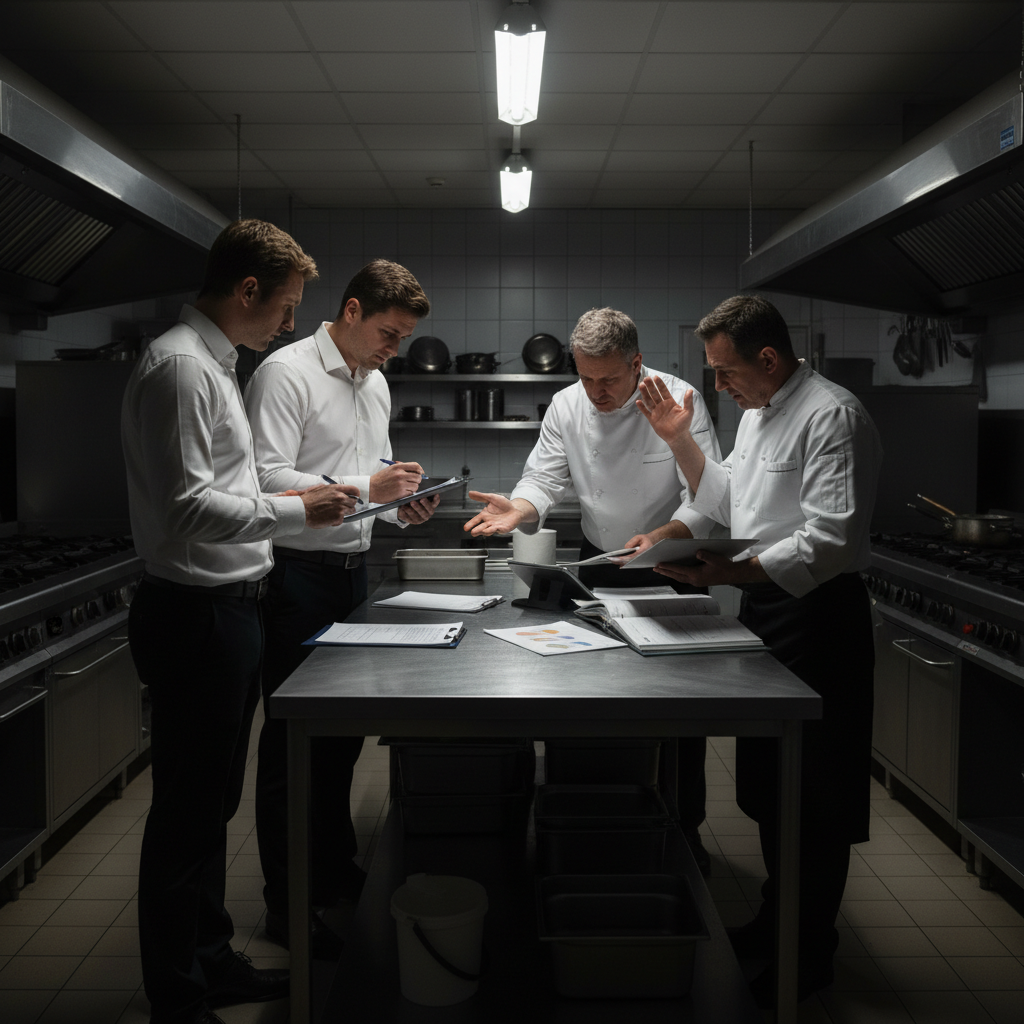
Dark kitchen operators overlook critical compliance verification steps that traditional restaurants catch through regular customer-facing operations. The operator awareness gap creates specific patterns of non-compliance that emerge during formal inspections.
The biggest miss involves cleaning frequency adjustments for high-volume operations. Many dark kitchens operate 12-16 hour cooking schedules to serve multiple delivery platforms simultaneously. Standard 6-month cleaning intervals prove insufficient for these grease loads. School canteen operations provide a comparison – institutional kitchens serving high volumes typically need quarterly cleaning to maintain TR19 Grease specification limits.
Post-clean verification represents another common gap. Dark kitchen operators often accept cleaning certificates without understanding the testing requirements. TR19 compliance demands grease contamination measurement at specific ductwork locations, not just visual confirmation. Many operators discover this during insurance claims when adjusters demand contamination level documentation.
Fire safety documentation failures plague converted units. Operators install extraction systems but skip fire risk assessment updates required when changing building use classification. The Regulatory Reform (Fire Safety) Order 2005 demands updated assessments whenever kitchen operations begin in previously non-kitchen spaces.
Pattern analysis from 47 dark kitchen compliance audits reveals three consistently missed requirements: inadequate grease filter replacement schedules (found in 83% of audits), missing access panel fire rating restoration after conversion work (67% of conversions), and failure to establish emergency contractor contact procedures for 24-hour cleaning access (74% of shared building operations).
Operators also underestimate the testing burden. TR19 compliance requires surface contamination sampling at multiple ductwork locations after each clean. Many assume visual inspection suffices, only discovering the measurement requirement when insurance renewals demand specific contamination level documentation.
Frequently Asked Questions
Can dark kitchens share extraction systems with other tenants?
Dark kitchens can share extraction systems in multi-tenant buildings, but each operator remains individually liable for their section’s TR19 compliance. Shared systems require clear maintenance agreements specifying who cleans which ductwork sections and when.
Do high-volume dark kitchens need more frequent extraction cleaning?
High-volume dark kitchens typically need quarterly cleaning instead of the standard 6-month interval for restaurants. The intensive cooking schedules and lack of dining room ventilation means grease accumulates faster in extraction systems.
What happens if fire officers find non-compliant extraction in a dark kitchen?
Fire officers can immediately close non-compliant dark kitchens under the Regulatory Reform (Fire Safety) Order 2005. Unlike restaurants where customers provide immediate pressure for reopening, dark kitchens face longer closure periods while arranging emergency extraction cleaning.